Digital Logbooks: Transforming Laboratory Documentation from Paper to Smart Systems
Picture this scenario: It's 2:30 PM on a Friday afternoon, and your laboratory is in the middle of a critical FDA inspection. The auditor asks to see the usage records for a specific piece of equipment from three months ago, along with the consumables used during that analysis.
In a traditional paper-based laboratory, this simple request triggers a frantic search through filing cabinets, loose-leaf binders, and dozens of handwritten logbooks scattered across workstations. Laboratory staff scramble to locate the right notebook, hoping the previous technician's handwriting is legible and that coffee stains haven't obscured crucial data. Hours can pass before the records are found—if they're found at all.
Now imagine the same scenario with a digital logbook system. Within thirty seconds, the laboratory manager confidently pulls up the exact records on screen, complete with cross-referenced data showing equipment usage, specific consumables consumed, batch numbers, environmental conditions, and associated project details. The auditor nods approvingly, impressed by the comprehensive audit trail and instant traceability. The inspection continues smoothly, and your team's credibility shines.
This dramatic contrast showcases more than just technological convenience—it represents a fundamental transformation in how laboratories handle documentation. We're witnessing an exciting evolution from passive record-keeping to intelligent data management that actively enhances operations while ensuring bulletproof regulatory compliance. In today's fast-paced environment where laboratories handle increasingly complex analyses and face growing regulatory scrutiny, this transformation isn't just beneficial—it's absolutely essential for success and growth.
The Hidden Costs of Paper-Based Documentation
Before diving into the exciting world of digital solutions, let's uncover what traditional documentation really costs modern laboratories. Beyond the obvious expenses of notebooks, filing cabinets, and storage space, paper-based systems exact a surprising hidden toll that many organizations don't realize until they crunch the numbers and face the shocking reality.
Here's a real-world example that hits home: Consider a mid-sized analytical laboratory processing 500 samples monthly. Each sample generates multiple logbook entries across equipment usage, consumables consumption, and quality control checkpoints. With paper systems, just one misplaced entry can trigger hours of detective work, cause delayed reports, and create potential compliance nightmares. Multiply this chaos across hundreds of analyses, and the productivity drain becomes absolutely staggering.
The environmental implications are equally eye-opening. A typical laboratory consumes thousands of pages annually for documentation alone—and that doesn't even include the massive carbon footprint from transportation, storage, and eventual disposal. As sustainability rockets to the top of corporate priorities, paper-based documentation creates an embarrassing conflict with the environmental goals that stakeholders and regulators now demand organizations embrace.
Advanced Filtering and Search: The Intelligence Revolution
Here's where digital logbook systems truly shine—they transform tedious information retrieval from time-consuming archaeological expeditions into lightning-fast, intelligent queries that deliver exactly what you need. Imagine the frustration of trying to identify usage patterns for a specific reagent across six months of handwritten entries, then compare that to the satisfaction of typing a search term and instantly receiving comprehensive results with beautiful visual analytics.
Modern analytical laboratories operate like sophisticated orchestras, with dozens of instruments, hundreds of consumables, and thousands of analyses creating intricate data symphonies. Finding specific information within this complexity requires smart tools that don't just understand context—they recognize patterns and present results in meaningful ways that actually support better decision-making.
Intelligent Multi-Dimensional Filtering empowers laboratory managers to ask questions that were previously impossible to answer efficiently. Which equipment shows seasonal performance variations? How do different operators' techniques affect analytical precision? What consumables exhibit unusual consumption patterns that might signal quality issues or process inefficiencies? Now you can get these answers instantly.
Equipment logbooks transform into powerful searchable databases where filtering by instrument name, manufacturer, date ranges, project associations, user activity, and maintenance status happens in the blink of an eye. Consumables tracking evolves from tedious manual inventory checks into intelligent searches by item name, batch numbers, catalog IDs, usage patterns, and project-specific consumption analytics. General inventory management graduates from periodic audits to real-time monitoring with historical pattern recognition and predictive insights that feel almost magical.
The sophistication gets even better with real-time processing that handles complex searches across millions of records in milliseconds. These systems maintain incredibly sophisticated indexing structures that enable pattern matching, date range filtering, and multi-field searches spanning different categories of information. Advanced users can construct complex queries using Boolean operators and regular expressions for precise data mining that reveals insights completely hidden in traditional documentation systems.
Speed Versus Complexity: The Time Revolution
The difference between digital and paper-based retrieval represents one of laboratory management's most dramatic game-changers. Traditional systems often feel like frustrating archaeological work—digging through endless layers of documentation, hoping previous researchers actually followed proper protocols and that time hasn't turned your records into illegible relics.
Here's a scenario that will resonate with every lab manager: A quality assurance manager receives an urgent request to verify calibration history for an instrument used in a batch analysis six weeks ago. In paper-based systems, this seemingly simple request triggers a complex investigation that would make detective work look easy. The manager must identify potential logbooks, physically hunt down volumes among potentially dozens of similar books, manually examine pages for specific timeframes, and decipher handwriting that may include cryptic abbreviations or unclear entries.
Digital systems completely transform this painful process into seconds of focused productivity. The manager confidently opens the sleek digital interface, enters the instrument identifier and date range, and instantly receives complete chronological displays with personnel involved and quality metrics from that exact timeframe. The system doesn't just answer the immediate question—it provides rich context that enables deeper analysis and proactive problem-solving.
Simultaneous Multi-User Access revolutionizes how teams collaborate. Picture this: While one person reviews historical equipment usage patterns, another team member simultaneously accesses the same data to analyze consumable consumption trends, and a third user examines compliance aspects—all working together without any physical constraints or information degradation. This parallel access capability transforms collaborative analysis from an impossible dream in paper-based systems into a natural, seamless process that dramatically enhances team productivity and decision-making quality.
Remote Accessibility provides strategic advantages that extend far beyond mere convenience. When senior scientists need to review experimental protocols while working remotely or traveling to conferences, digital systems provide secure, authenticated access to all necessary information from anywhere. This capability proved invaluable during recent global disruptions requiring remote work, clearly demonstrating how digital systems provide operational resilience and business continuity that physical documentation simply cannot match.
Automatic Inventory Synchronization: The Seamless Integration Revolution
Here's where digital logbook systems showcase one of their most impressive capabilities—creating seamless, real-time connections between documentation and inventory management that will change how you think about laboratory operations. Traditional paper-based systems treat these as completely separate processes, creating frustrating opportunities for discrepancies, annoying delays, and costly errors that cascade through laboratory operations and impact both efficiency and compliance.
Consider the complexity when laboratories conduct analytical sequences requiring multiple consumables and inventory items, precise equipment usage tracking, and accurate quantity management. Traditional systems force you into a juggling nightmare—requiring entries in separate logbooks, manual inventory adjustments, equipment usage logs, and project cost tracking sheets. Each entry becomes a potential failure point where human error, oversight, or inconsistent recording practices introduce discrepancies that demand time-consuming reconciliation.
Automated Integration transforms this complex, error-prone process into elegant simplicity that works like clockwork. When technicians log analytical runs, the system automatically springs into action—deducting consumed quantities from available inventory, updating pack-level tracking for batch-specific traceability, calculating remaining quantities with mathematical precision, and generating intelligent alerts when usage patterns suggest approaching stock depletion. Simultaneously, the system seamlessly links usage data to project cost calculations, maintains complete usage history for lifecycle analysis, and updates equipment maintenance schedules based on utilization patterns.
Predictive Intelligence goes far beyond simple arithmetic to analyze usage patterns over time, identifying seasonal variations, project-specific consumption trends, and equipment-dependent consumption rates. This analytical capability enables proactive inventory management that anticipates needs before they become critical bottlenecks. Rather than waiting for inventory levels to hit predetermined reorder points, the system actually predicts optimal procurement timing based on upcoming project schedules, historical patterns, and seasonal laboratory activity variations—it's like having a crystal ball for your inventory needs.
Tamper-Proof Data Integrity: Building Unshakeable Regulatory Confidence
In regulated laboratory environments, data integrity represents far more than good practice—it forms the rock-solid foundation upon which entire industries build their compliance strategies and regulatory confidence. Traditional paper logbooks, despite well-intentioned procedural safeguards, present inherent vulnerabilities that digital systems address with impressive sophistication and reliability that will give you complete peace of mind.
Paper-based integrity requires exhausting constant vigilance: bound and numbered pages to prevent insertion or removal, strict correction protocols with specific ink requirements and signature procedures, and storage that protects against environmental damage while maintaining inspection accessibility. Despite these precautions, paper records remain vulnerable to accidental damage, deliberate tampering, and natural degradation over time.
Immutable Record Architecture makes unauthorized modifications technologically impossible under normal operating conditions. When laboratory technicians create new logbook entries, the system writes information to append-only data structures where records exist permanently in their original form. Updating or deleting erroneous log entries falls under strict control to avoid data manipulation and tampering—creating an impenetrable fortress of data protection.
Comprehensive Audit Trails capture not just what happened, but provide complete context for every action within the laboratory management environment. When someone changes particular records, the system meticulously logs the complete context of the change, together with detailed old vs new data comparison. This comprehensive activity tracking creates an unbroken chain of custody that supports regulatory confidence and internal accountability with ironclad reliability.
The systems triumphantly implement CFR 21 Part 11 compliance through electronic signatures, secure audit trails, and data integrity controls while embodying all ALCOA++ principles: Attributable, Legible, Contemporaneous, Original, Accurate, Complete, Consistent, Enduring, and Available. This comprehensive approach ensures that digital records not only meet current regulatory requirements with excellence but provide the solid foundation for emerging compliance frameworks demanding even higher standards of data reliability and traceability.
Environmental Impact: The Sustainability Revolution
The environmental transformation from paper-based to digital documentation represents one of modern laboratory management's most exciting sustainability opportunities. As organizations increasingly embrace environmental responsibility, the carbon footprint of traditional documentation practices becomes both a significant liability and an incredible opportunity for meaningful positive impact.
Quantifying the Paper Trail: Here's a wake-up call that will surprise you—a typical analytical laboratory with just 20 staff members consumes approximately 50,000 sheets of paper annually for logbook documentation alone. That's equivalent to 10 trees! This calculation doesn't even include photocopying, temporary notes, draft documents, and archival printing that often doubles actual consumption. Multiply this across thousands of laboratories globally, and the environmental impact becomes truly staggering.
Beyond direct paper consumption, the carbon footprint extends through the entire documentation lifecycle. Paper production requires massive water and energy consumption, chemical processing for bleaching and coating, and transportation from manufacturing facilities to distributors to end users. The storage infrastructure for compliance-grade documentation demands climate-controlled facilities that consume energy for temperature and humidity control, while off-site archival services add transportation emissions for document movement and retrieval.
The Digital Transformation: Digital logbook systems eliminate this environmental burden entirely while providing superior functionality—it's a complete win-win situation. The carbon footprint of digital storage—including servers, data centers, and backup systems—represents just a fraction of paper-based documentation's environmental impact when calculated per record stored. Modern data centers increasingly utilize renewable energy sources and advanced cooling technologies that minimize environmental impact while providing unprecedented data protection and accessibility.
Corporate Sustainability Alignment: Digital transformation aligns perfectly with corporate sustainability initiatives that stakeholders and regulators increasingly expect. Organizations can quantify and report environmental benefits from digital documentation adoption, contributing to ESG (Environmental, Social, and Governance) goals that influence investor relations, regulatory standing, and market positioning. This alignment creates tremendous value beyond operational efficiency, supporting strategic objectives that extend throughout the organization.
Future Environmental Impact: As laboratories expand and analytical volumes increase, digital systems scale without proportional environmental impact increases—that's the beauty of digital scaling. Paper-based systems create linear environmental burdens that grow with organizational expansion, while digital systems provide logarithmic scaling where incremental growth requires minimal additional environmental resources. This scaling advantage becomes increasingly important as laboratories adopt high-throughput technologies and process larger sample volumes.
How AILabAssistant Delivers Digital Excellence
AILabAssistant represents the exciting evolution of digital logbook systems from theoretical possibilities to practical realities that genuinely transform laboratory operations. Our comprehensive laboratory information management system embodies every capability discussed in this analysis while providing additional features that position laboratories for remarkable future success.
Intelligent Search and Filtering: Our platform implements advanced matching algorithms that work like magic, enabling laboratory personnel to find information instantly with search options that are intelligently populated based on your specific data. Multi-dimensional filtering operates across equipment usage, consumables consumption, and inventory tracking with real-time processing that handles complex queries across millions of records in mere milliseconds—the speed will impress you.
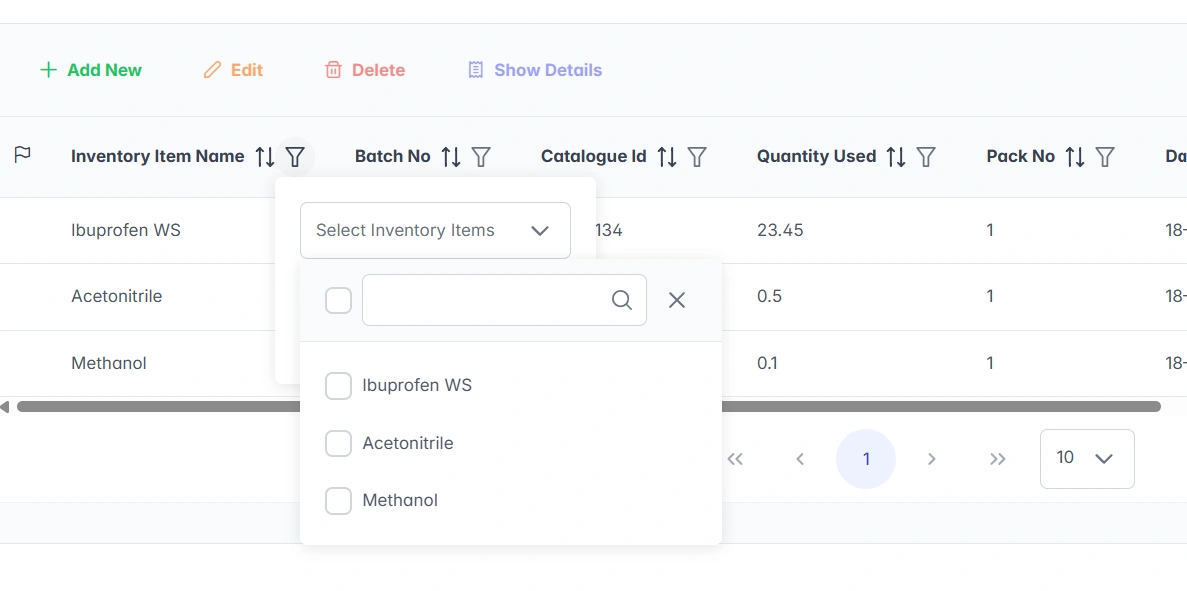
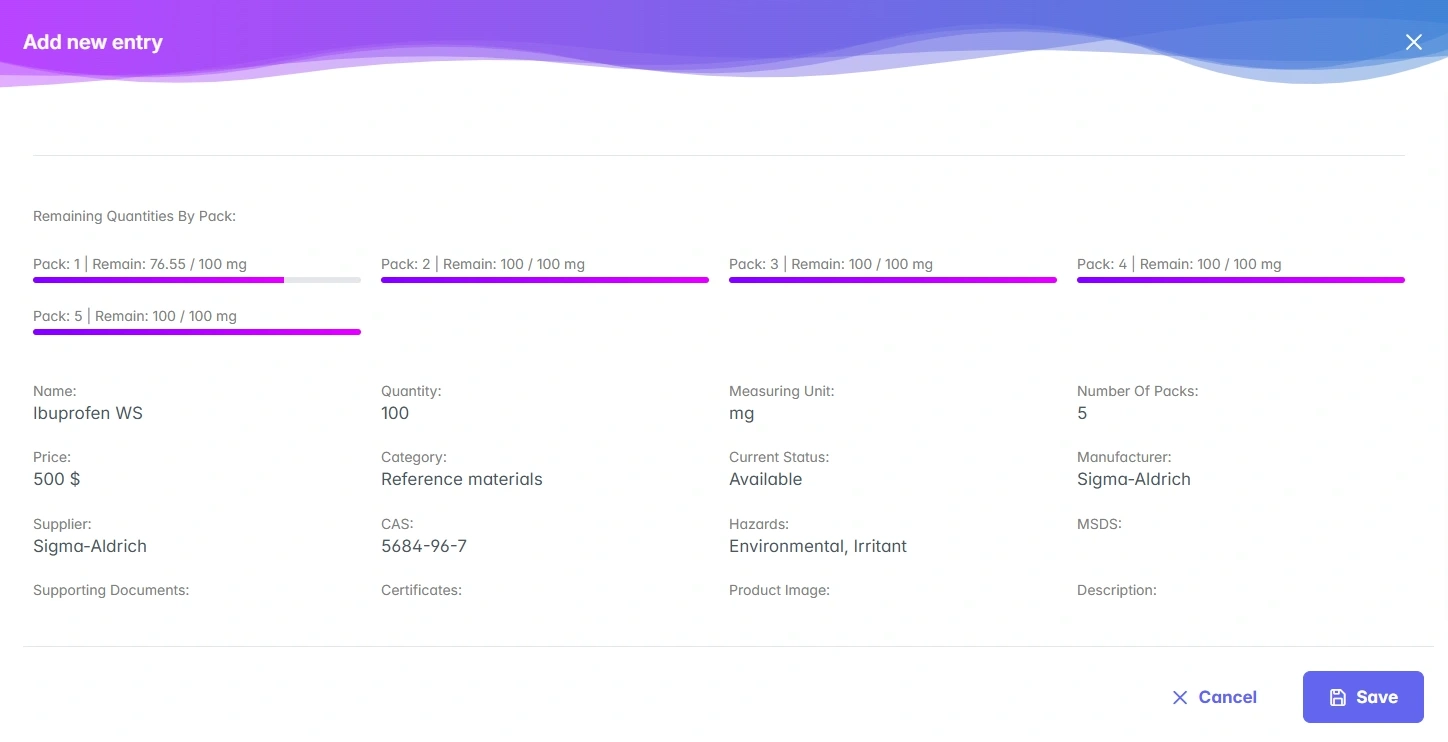
Seamless Inventory Integration: AILabAssistant automatically synchronizes documentation with inventory management, completely eliminating the frustrating disconnects that plague traditional systems. When technicians log analytical runs, our system instantly updates inventory levels, tracks batch-specific traceability, generates intelligent alerts for approaching stock depletion, and links usage data to project cost calculations with mathematical precision that ensures accuracy.
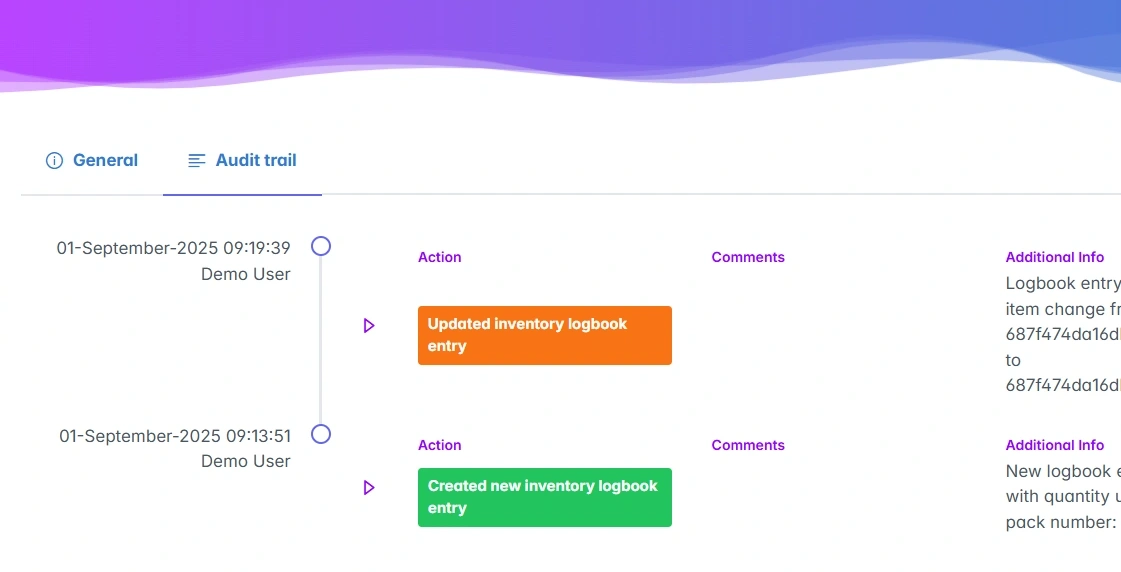
Regulatory-Grade Data Integrity: Our robust architecture ensures that changes to log entries are permitted only to authorized personnel, effectively preventing unauthorized data manipulation and tampering. Comprehensive audit trails provide complete context for every change and action while temporal integrity mechanisms capture precise timestamps synchronized to authoritative time sources, ensuring CFR 21 Part 11 compliance and ALCOA++ principle implementation that regulatory auditors love.
Environmental Sustainability: By eliminating paper-based documentation, AILabAssistant helps laboratories achieve measurable environmental benefits that support corporate sustainability initiatives—making you an environmental champion. Our digital systems scale efficiently as organizations grow, providing logarithmic environmental advantages that improve over time rather than creating linear burdens that increase with expansion.
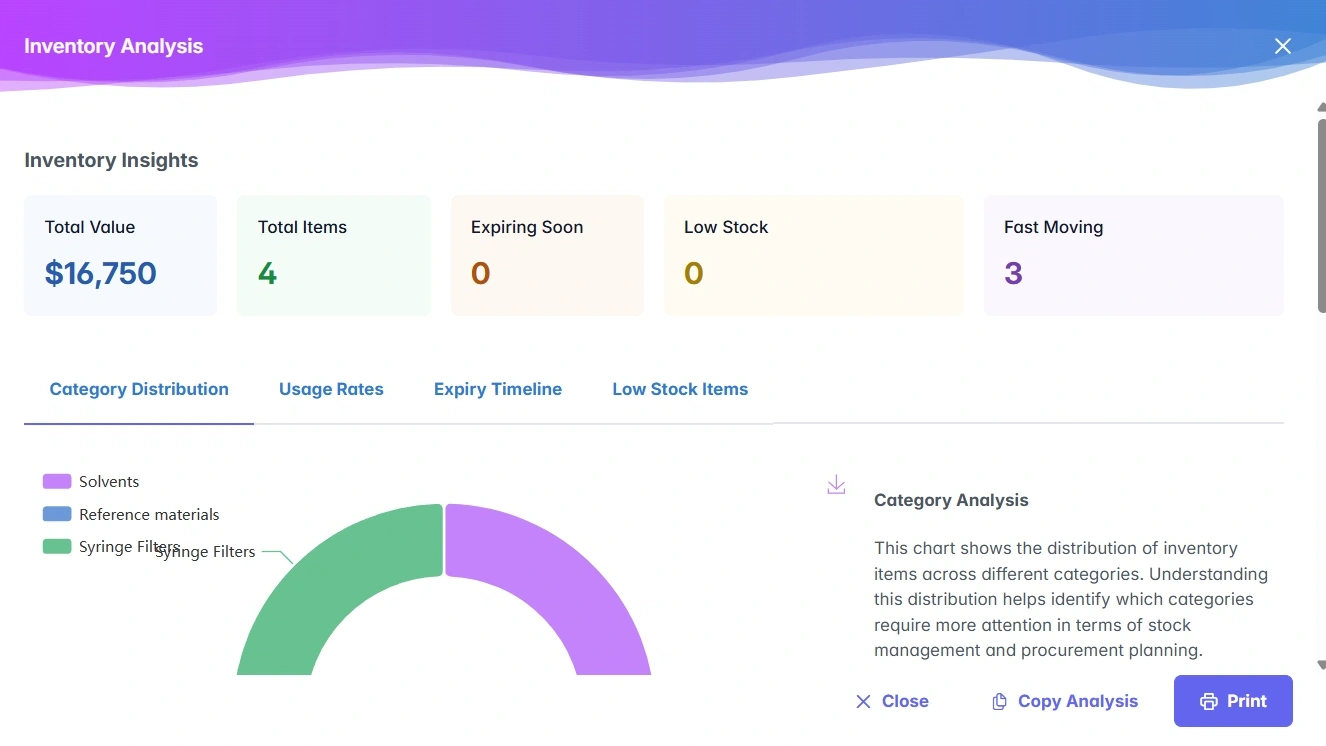
Advanced Analytics and Predictive Intelligence: Our sophisticated machine learning algorithms identify usage patterns and optimization opportunities that enable truly proactive laboratory management. Equipment utilization analysis provides maintenance prediction and scheduling optimization, while predictive inventory management anticipates needs before they become critical bottlenecks that could disrupt operations.
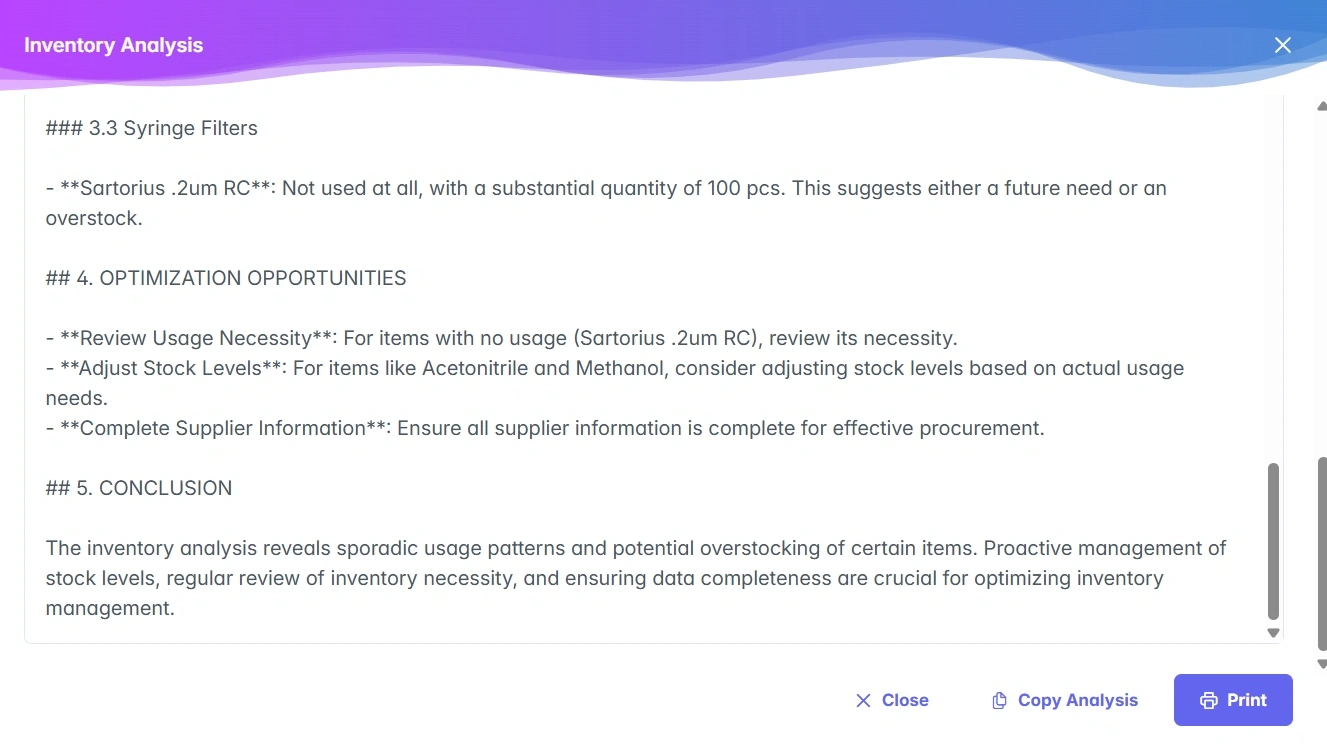
Proven Implementation Success: AILabAssistant is designed to be extremely simple and user-friendly, ensuring smooth transitions that maximize user adoption while maintaining operational continuity. We provide comprehensive ongoing support throughout the implementation process and beyond, helping organizations realize the full potential of digital transformation and achieve lasting success.
The future of laboratory documentation is here, and it's more intelligent, efficient, and sustainable than ever before. AILabAssistant makes this exciting future accessible to laboratories of all sizes, providing enterprise-grade capabilities with the flexibility and support that ensure successful implementation and long-term success that exceeds expectations.
Contact us today to discover how AILabAssistant can transform your laboratory documentation from a compliance burden into a strategic advantage that enhances operations, ensures regulatory confidence, and supports your organization's sustainability goals in ways that will revolutionize your laboratory management approach.
For specific implementation guidance, contact us or consult with laboratory informatics specialists and regulatory compliance experts.
Ready to Transform Your Lab Operations?
Experience the power of AI-enhanced laboratory management with AILabAssistant. Join laboratories worldwide in modernizing their data management and compliance workflows.